People arriving at casting usually meet four families of material, and the differences between them are more about how you work than about what the finished object looks like.
This page describes those families in general terms. It does not rank FormCast+ against them on strength, water resistance or durability, because our own testing is not finished — and borrowing another manufacturer’s figures would be dishonest.
The four families
- Water-mixed mineral materials
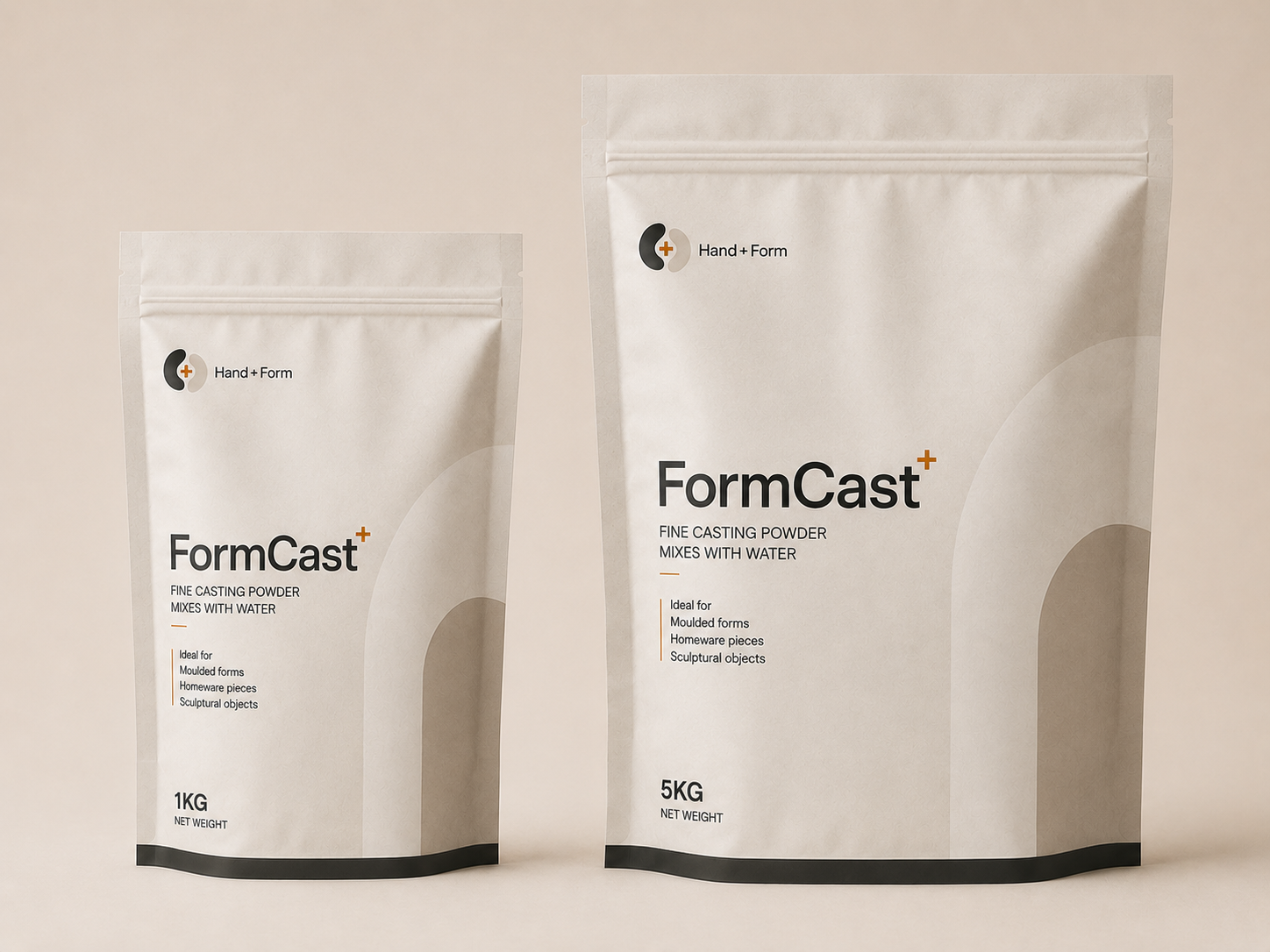
- A dry powder combined with water that sets into a solid. No chemistry to measure beyond a ratio, no fumes to manage, and cleanup while wet is water. This is the family FormCast+ belongs to.
- Plaster of Paris
- A gypsum material, mixed with water, long established and inexpensive. It sets quickly, takes fine detail well and is genuinely useful for moulds and studies. It is also comparatively soft and porous, which is why it is more often used for prototypes and mould-making than for finished objects that get handled.
- Acrylic-modified composites
- Water-based systems where a mineral powder is mixed with an acrylic liquid rather than plain water. Jesmonite is the best known name in this category. They are widely used for finished pieces and typically cost more per kilogram.
- Epoxy resin
- A two-part reactive system: a resin and a hardener, measured precisely and cured by chemical reaction. It gives glass-clear results nothing else matches, and requires ventilation, gloves and care with skin contact. Cleanup involves solvents, not water.
How working with them differs
The practical differences you notice on the first day, rather than the performance figures:
| Water-mixed mineral | Plaster of Paris | Epoxy resin | |
|---|---|---|---|
| Mixed with | Water, by weight | Water | A second chemical component, by exact ratio |
| Sets by | Hydration — no heat needed | Hydration | Chemical reaction |
| Typical clarity | Opaque | Opaque | Can be transparent |
| Colour method | Pigment through the body | Pigment through the body | Pigment or dye in the resin |
| Cleanup while wet | Water | Water | Solvent |
| Ventilation | Follow pack guidance | Follow pack guidance | Required |
General characteristics of each material family, not a product comparison. Always follow the safety guidance supplied with whichever material you actually use.
Which to choose
If you want a clear object with things suspended inside it, epoxy is the only one of these that does that.
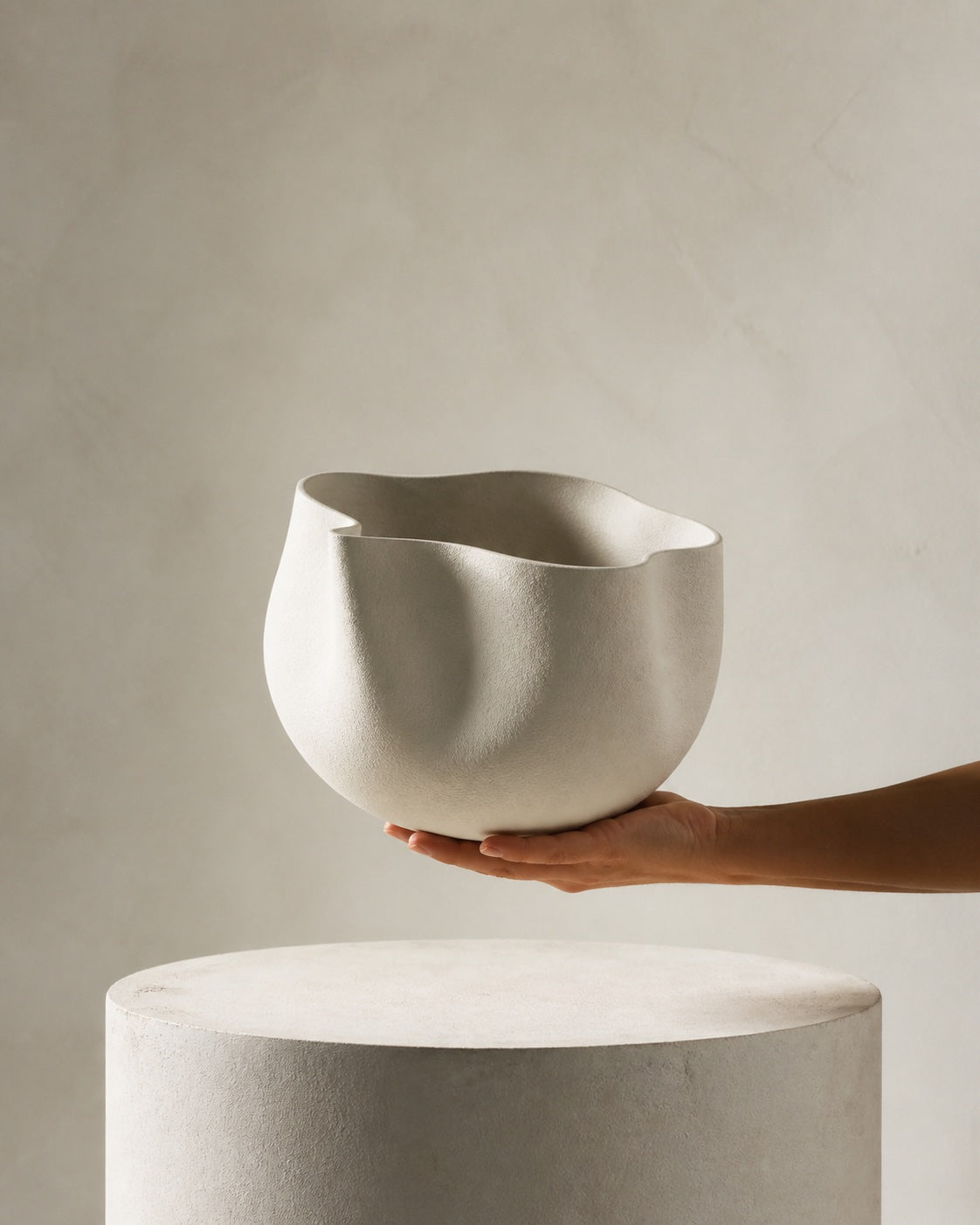
If you want a solid, opaque object with a mineral surface — a tray, a vessel, a relief — a water-mixed material gets you there with less equipment and less protective kit.
If you are making moulds and studies rather than finished pieces, plaster remains hard to beat on cost.
Questions people ask
Is this a Jesmonite alternative?
They sit in adjacent families and are used for similar objects, so people naturally compare them. What we are not going to do is publish a performance comparison before our own testing is complete.
Is it better than plaster?
It is different. Plaster is excellent value and sets fast, which makes it very good for moulds and studies. A water-mixed mineral material aimed at finished objects is generally chosen for surface quality and how it takes colour through the body.
Can I use it outdoors?
Treat any untested piece as an indoor, decorative object. Outdoor and water-exposure testing is not complete, and we would rather say so than guess.
