Proposed experience · the unit of learning is the piece, not the article.
Second make · adds colour
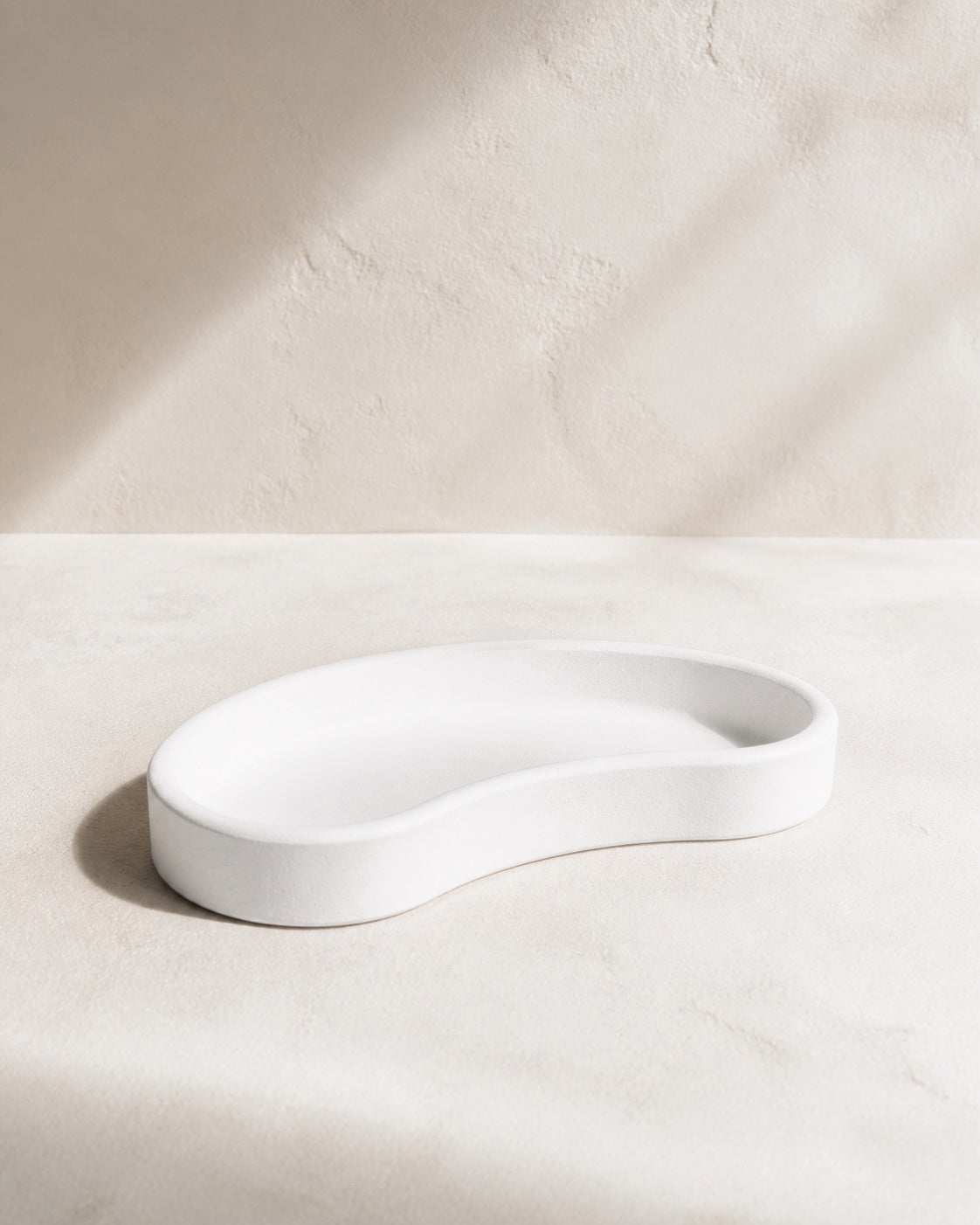
Kidney Catchall
Capability Put colour through the body of a piece
An organic outline with a considered curve — and the make where you put colour through the material for the first time.
- You will end up with
- A small everyday tray with one soft curve, in a colour you chose and can repeat.
- Time
- An afternoon, plus drying
- Steps
- 6
Before you start
What you need.
Plus accurate scales and water. Commerce sits here, once, at the moment it is genuinely useful — and not again.
The one number
Feel what the ratio does.
The make
Kidney Catchall, step by step.
Tick a step as you go and this page remembers where you were — no percentages, no scoring.
-
Cast a colour tile first
Before the piece you care about, mix a small amount with pigment and cast a flat tile. Label it with the pigment and the amount.
-
Set up, and measure the mould
Same as the first make: flat protected surface, mould in position, water method to find the total mix.
-
Disperse pigment into the water
Pigment+ goes into the measured water and gets mixed through before any powder arrives.
-
Add the powder and mix to even colour
Keep going until the colour is genuinely uniform — then stop. Extra mixing is extra air.
-
Pour, tap, and leave it
Low thin stream into the lowest point, firm taps to release air, then a level surface and no interference.
-
Demould, dry, finish
Peel the rim back, invert, and let it come out under its own weight. Finish the edge once the piece is fully dry.
While it sets
What to notice.
- Colour depth against thickness
- The same pigment reads differently in a thin tile and a thicker tray. This is why a set of matching objects needs matching sections.
- The curve
- An organic outline shows sanding errors that a circle hides. Work along the edge rather than into it.
If it did not work
That is the normal way in.
Nothing here is wasted — a failed cast is terrazzo chips and a piece of information about your process.
When you have made it
Put it on the shelf.
Work through the steps at your own pace, then mark the piece made.
On your shelf
You made the Kidney Catchall.
It is recorded on the workshop page. The record is of pieces made, not pages read.
Make it again, differently
The second one is
where it gets good.
The same tray in two colours from the same palette is the point where objects start to look like a collection.
Your failed casts and offcuts become chips. Nothing here is wasted.
The terrazzo techniqueOne next step, never three
Flow Tray
A broad, softly sculpted tray. One open mould, one mix, no colour — the make that teaches you the material.
Open this make